
Shiotsuki Toho moved to Taiwan in 1921 and founded the Taiten (Taiwan Art Exhibition) in 1927. He introduced Fauvism and focused on Taiwanese Indigenous themes. His design for Takahama Kyoshi's Iyo no Yu (The Hot Spring of Iyo) is a Taisho Roman masterpiece. His first major local work, Seiban Densetsu-shu (Legends of the Aborigines), features 11 woodcuts, earning him the title "Pioneer of Taiwanese book design" from the scholar Ikeda Toshio.
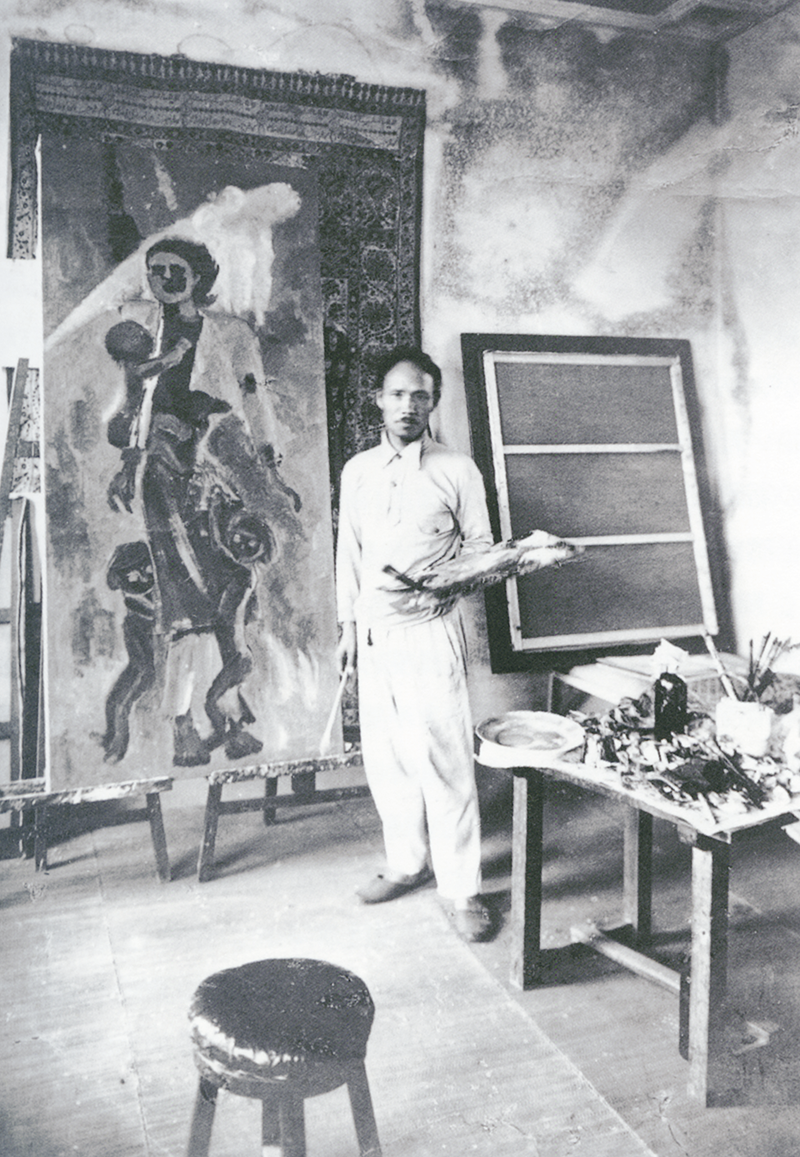
✦ Shiotsuki Toho with Mother (1932; original lost). (Courtesy of Mr. Shiotsuki Mitsuo)
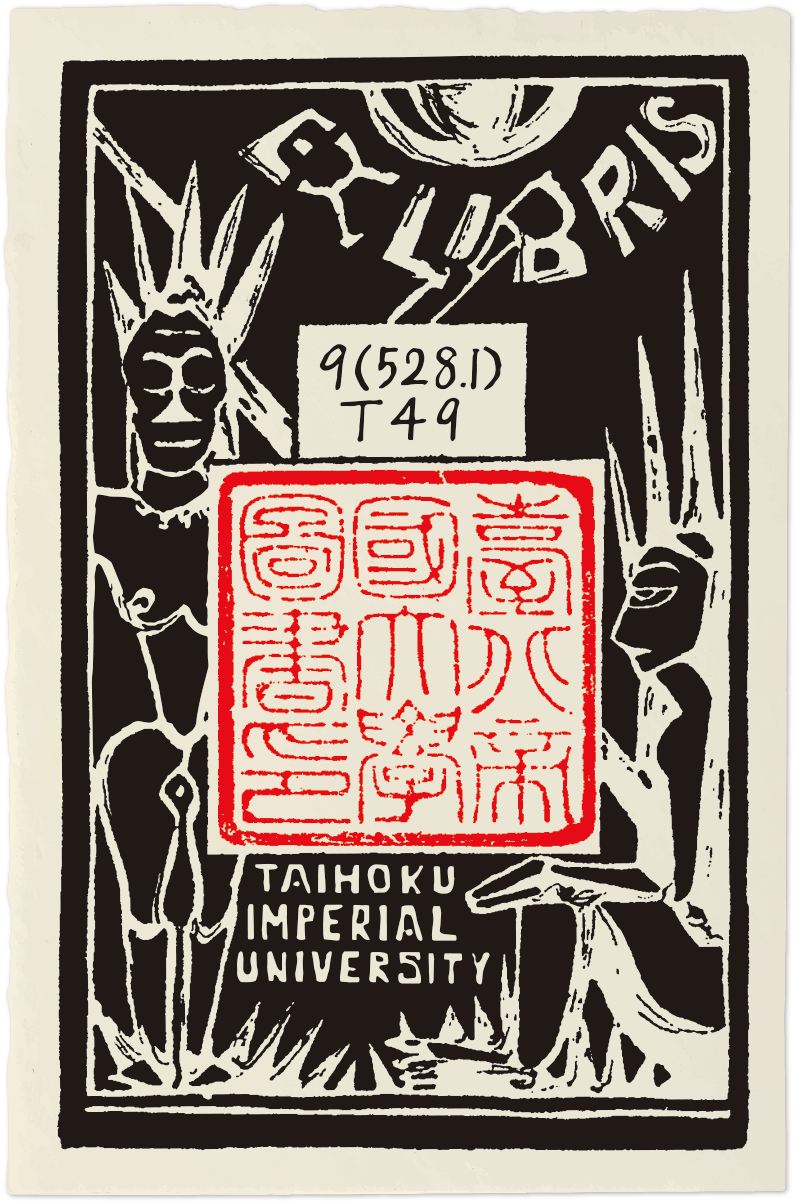
✦ Indigenous-themed bookplate designed by Shiotsuki Toho for NTU Library (formerly Taihoku Imperial University Library).
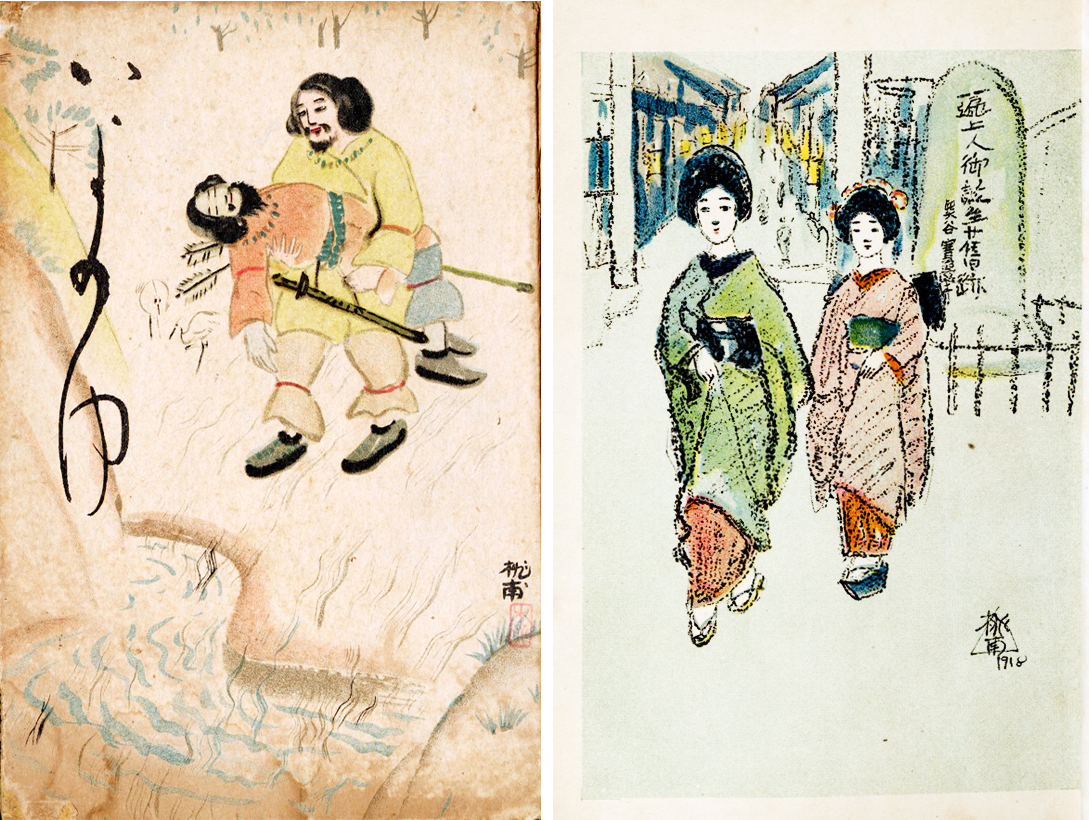
✦ First edition color cover and illustrations of Iyo no Yu (1919). (Donated by Prof. Lu Tsai-chih)
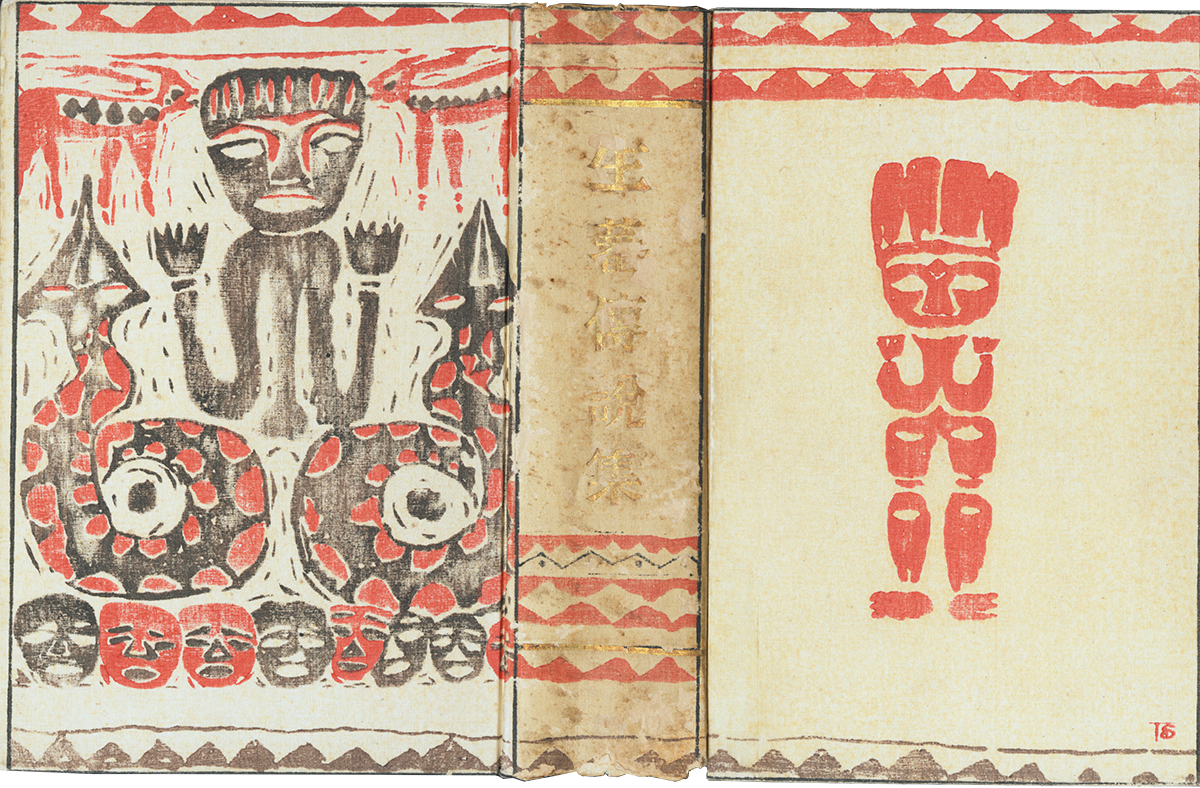
✦ Seiban Densetsushu (1923): Shiotsuki Toho’s first book design in Taiwan.
In 1933, Nishikawa Mitsuru returned to Taiwan and introduced the aesthetics of book design in Aisho (Book Lovers). He later edited Aisho and founded Maso Shobo (Mazu Bookstore) to publish Maso (Mazu) magazine.
In 1935, he co-founded the Creative Printmaking Association with Tateishi Tetsuomi and Miyata Yataro, integrating modern woodcuts into Taiwanese book design. In 1939, Maso Shobo became Nikko Sanbo. There, Nishikawa designed Taiwan Fukoki (Taiwanese Folklore and Geography), a hybrid of Western layout, Chinese thread-binding, and local prints, and praised as "the most beautiful book." In 1940, Tateishi Tetsuomi designed Kareito Shoka (Ode to Formosa), featuring the yellow-blue Riki Edition (Beautiful Lady Edition) and the vermilion Kojo Edition (Princess Edition).
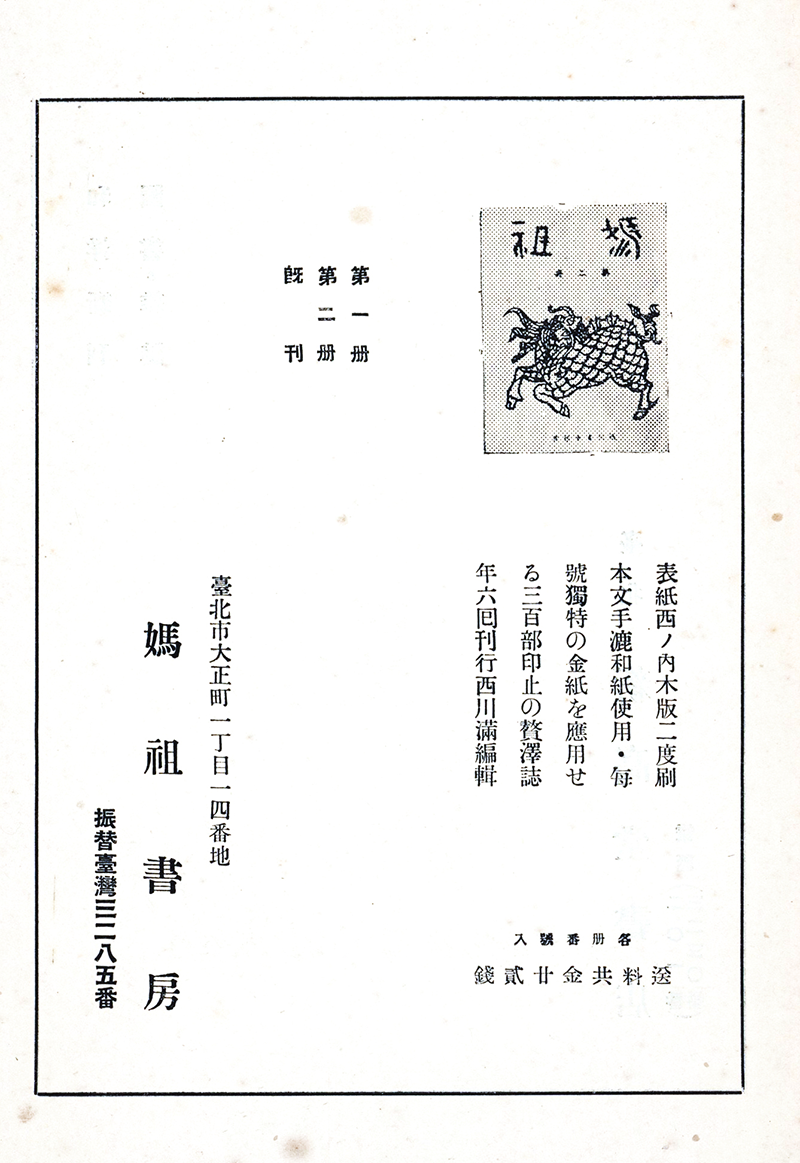
✦ "Mazu Shobo" advertisement in Aisho Vol. 3.

✦ Taiwan Futoki, Vol. 2.

✦ Kareito Shoka ("Princess Edition"), featuring inside photograph of Nishikawa Mitsuru at Kaiyuan Temple, Tainan, and his signature.
In the 1930s and 1940s, writers and artists collaborated in literary journals to build a rich cultural network.
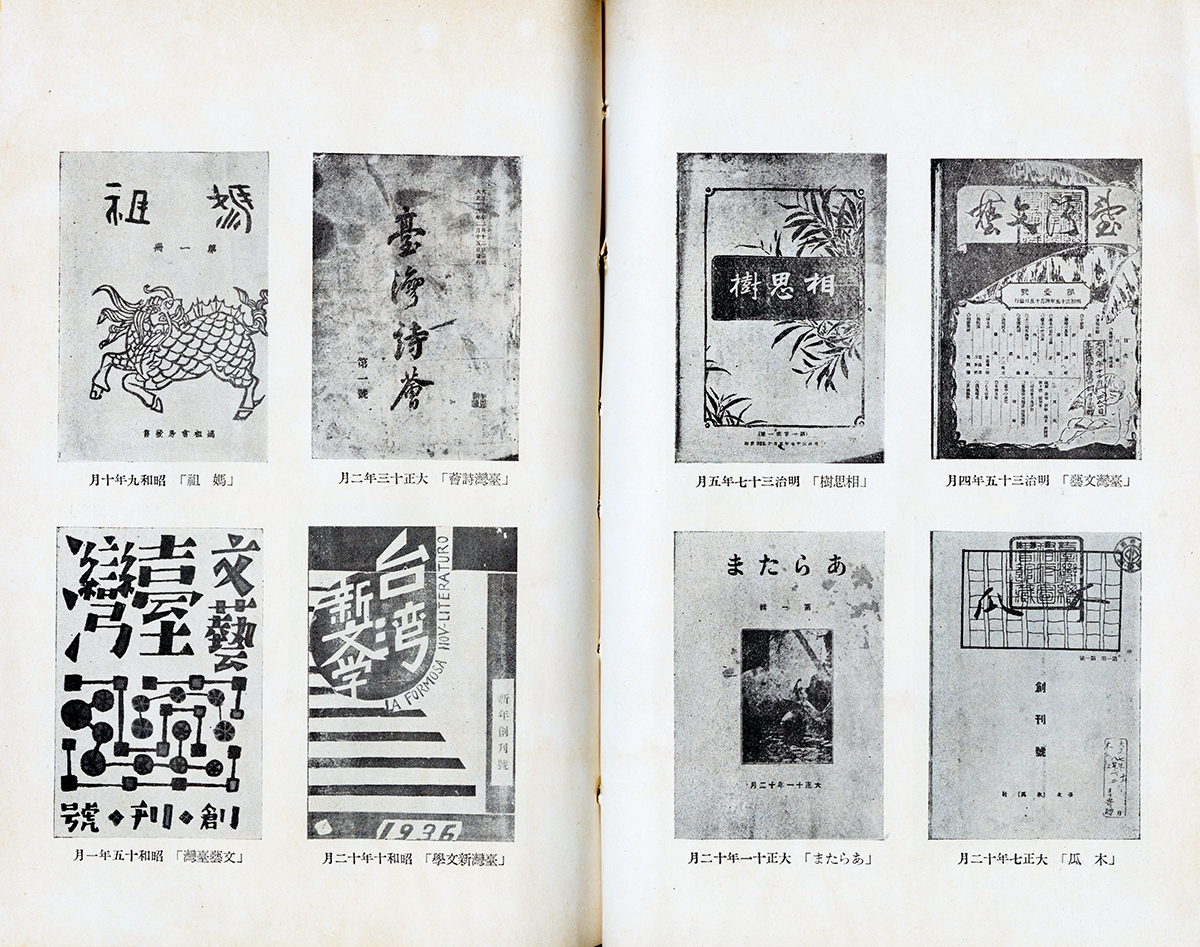
✦ Aisho Vol. 14 (1941) featured Taiwanese literary works for the first time, including the 1902 Taiwan Bungei.
Published by the Taiwan Literary League, it pulled in diverse writers and was closely associated with Sekitosha (Red Island Society), founded by Chen Cheng-po and Chen Chih-chi. The February 1935 cover featured Chen Cheng-po's art.
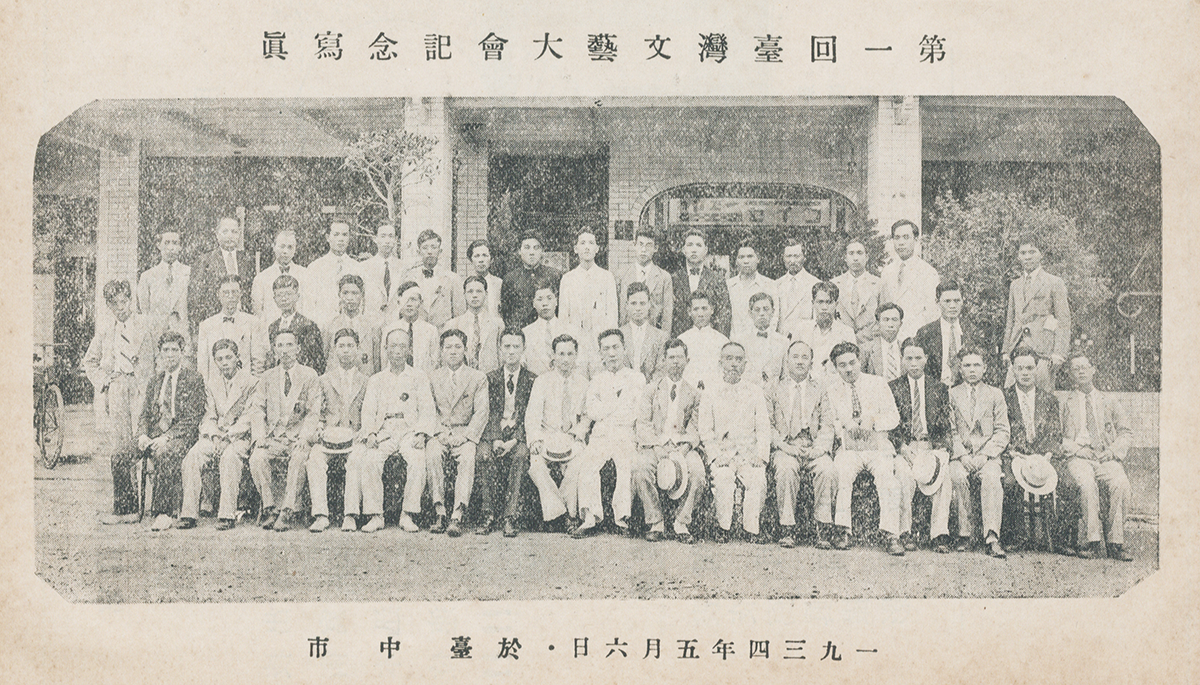
✦ The Taiwan Cultural Association and Taiwan Bungei served as key pillars of local consciousness and the New Literature Movement in colonial Taiwan, representing an island-wide movement and a iconic journal, respectively.

✦ Cover of Taiwan Bungei 2:2, featuring "1934 / Chen Cheng-po" at the bottom left.
It was published by the Taiwan Writers Association, which was formed mainly through the effort of Nishikawa's Taiwan Poets Association and the participation of Taihoku Imperial University professors. Running for 38 issues until 1944, it was colonial Taiwan's longest-running Japanese literary magazine.
Published by the Taiwan Literature Association for Public Service, it was edited by Yano Hojin and Nishikawa Mitsuru. Tateishi Tetsuomi drew the cover of the premier issue. As Nishikawa's mentor, Yano had Nishikawa design and publish many of his works.

✦ Cover of the inaugural issue of Taiwan Bungei (1944, Taiwan Literature Association for Public Service), designed by Tateishi Tetsuomi.
"Taiwan Literature" (Taiwan Bungaku) was founded in May 1941 by a literary group centered around the Taiwanese writer Chang Wen-huan. It published a total of 10 issues until the end of 1943.
※ Featured Collection: [Yang Yun-ping Collection – Periodicals]

✦ The cover of 1:1(1941.05) features a painting by Lee Shih-chiao.

✦ The cover of 3:2(1943.04) features a painting by Chen Chun-te.