
Chen Chi-mao (1926-2005) moved to Taiwan in 1946 and taught at Hualien Normal School in 1948. Inspired by eastern Taiwan and Indigenous culture, his wood engravings made him the “pioneer of modern Taiwanese printmaking.” His first design was for Wang Yu-tsen’s poetry collection Bianhe (1946), which was the first poetry collection in post-war Taiwan, symbolizing youthful ideals.

✦ Woodcuts by Chen Chi-mao, cover illustration by Ding Zhen-wan (1990).

✦ Wang Yu-tsen's poetry collection Bianhe, Chen Chi-mao's first book design work (credited under his pen name, Baiou).
In 1953, the monthly The Literary Train (Wenyi Lieche), a rare 1950s literary journal from southern Taiwan, was founded in Chiayi and edited by Chen Chi-mao, Ku Chih-hung, and Kuo Liang-hui. Chen designed its covers, including the first illustration of the premier issue, Spring Ox.
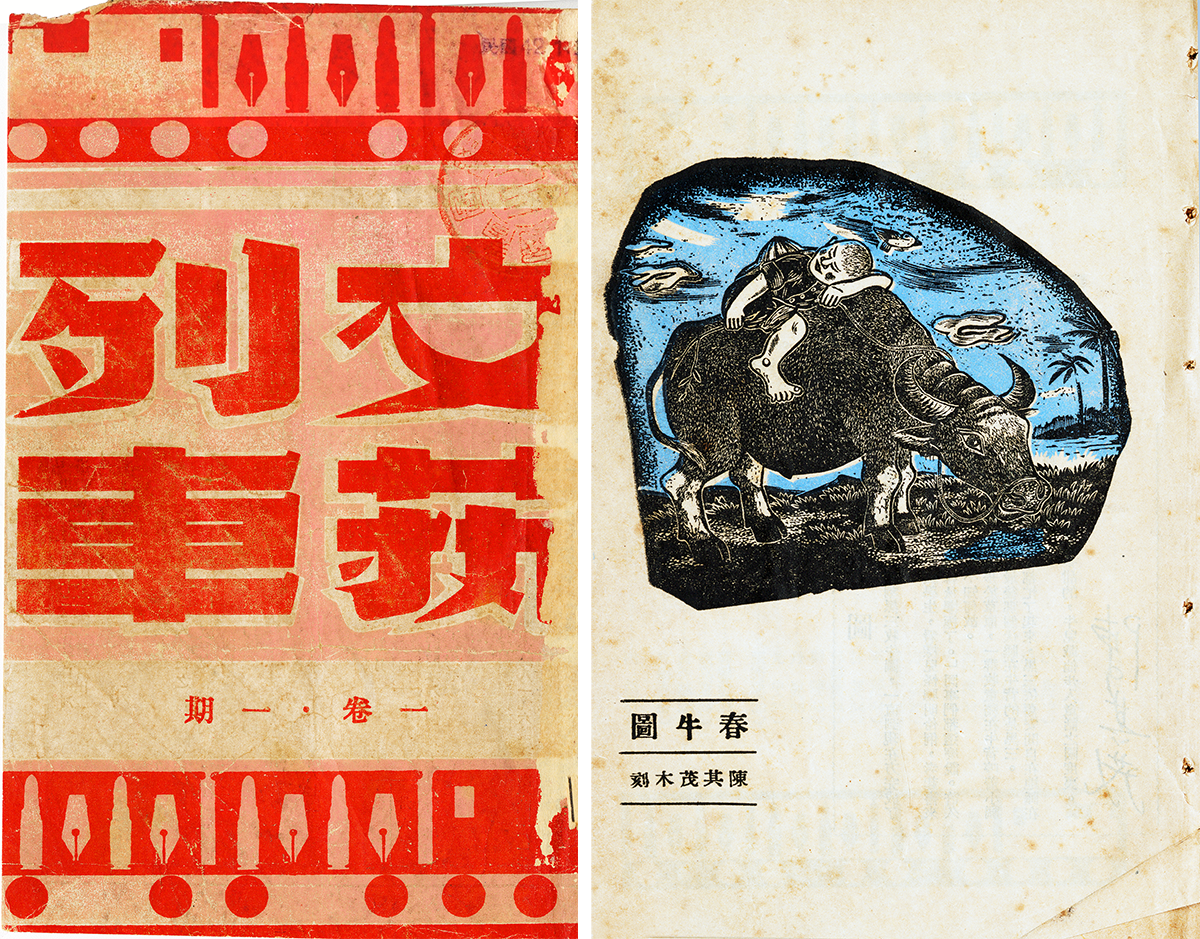
✦ First illustration in the inaugural issue of Literary Train: Chen Chi-mao's famous Spring Ox, an early work exploring periodical cover design.
Between 1950 and 1960, Chen created three major wood engraving series:

✦ Cover and original print of Moonlight over Swan Lake.
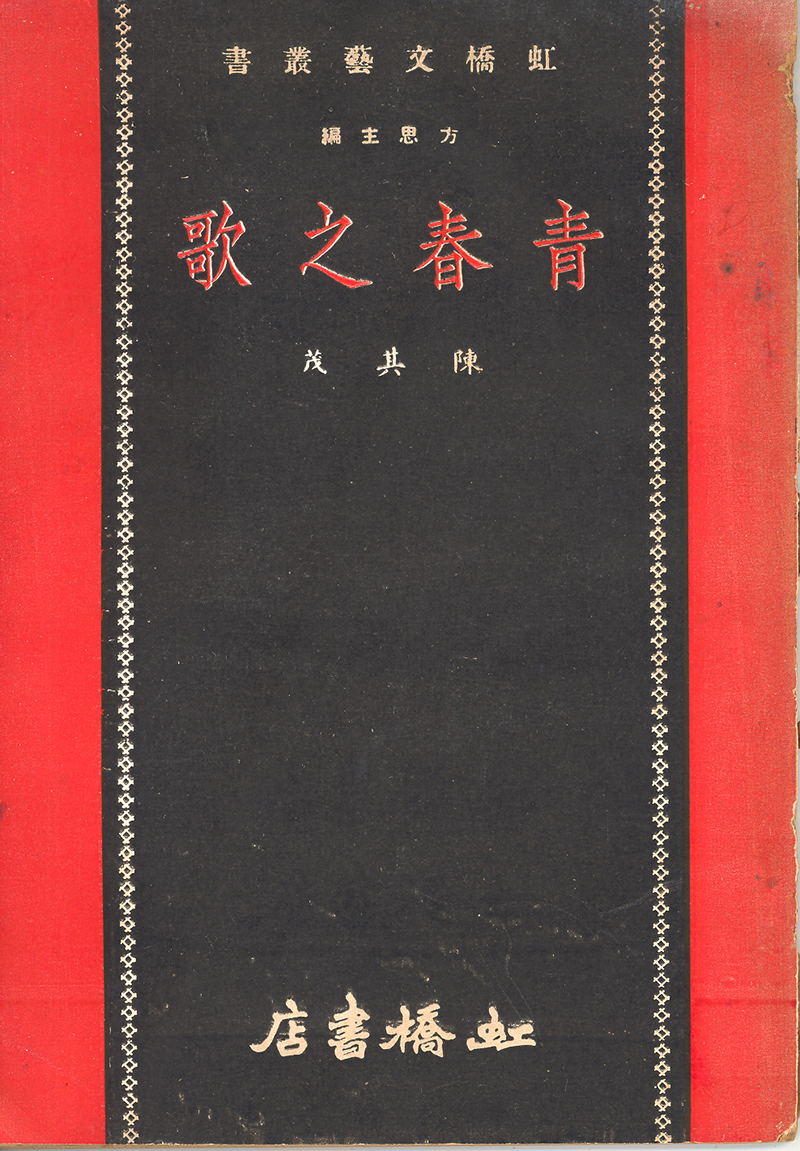
✦ Song of Youth cover: Chen Chi-mao's first lyrical woodcut poetry collection.
In 1955, Chen and Ms. Ting Chen-wan co-translated books on Western woodcuts. They married in 1959 and published Selected English Wood engravings (Vol. 1) in 1960. In 1961, Chen and Father Jean Lefeuvre co-translated The Destiny of Man, introducing Albrecht Dürer's works along with others.

✦ Title page illustration for a German Bible, from Human Destiny as Depicted by Western Woodcut Artists, Past and Present (p. 1).
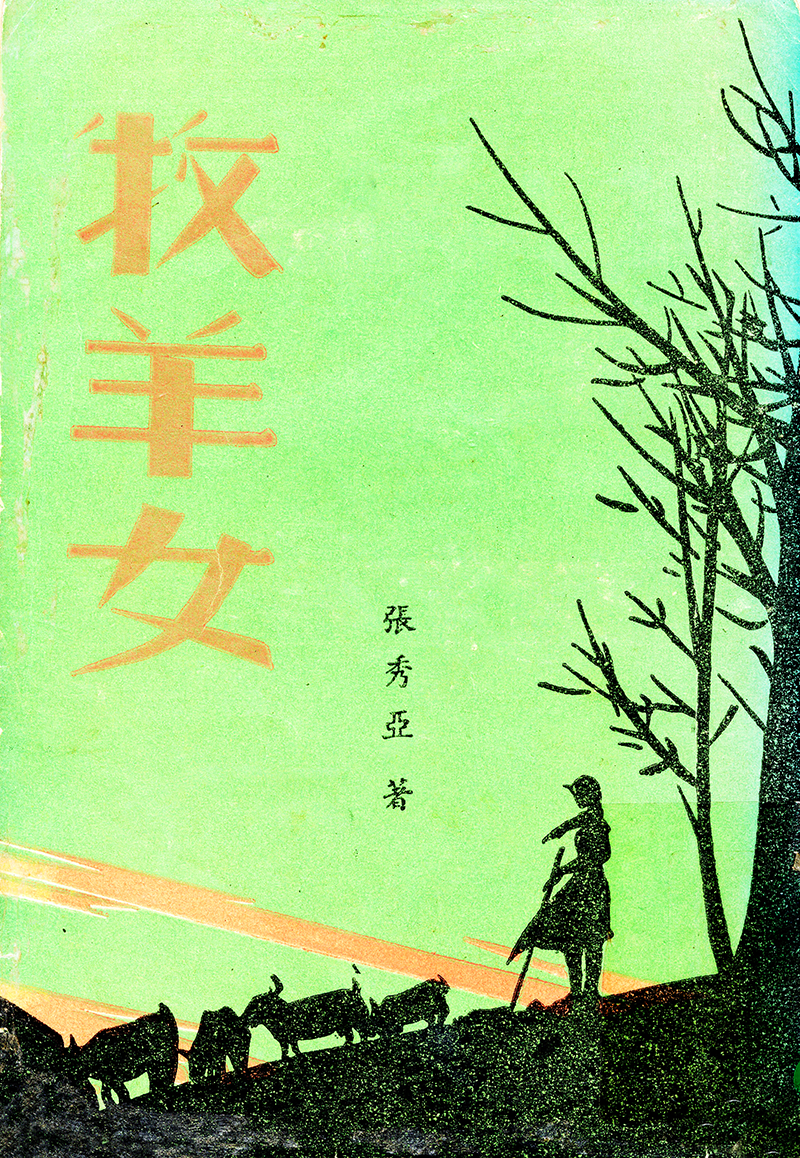
✦ The Shepherdess cover.
Meanwhile, Lefeuvre founded Kuangchi Press in Taichung. Through the invitation of author Chang Hsiu-ya, Chen became its art designer, opening the Golden Age of Kuangchi Literature. Chang’s The Shepherdess (1961) is one of his earliest book designs. Chen was also a diligent writer of nearly 20 books, including Glacier Poems and The Toy Dog. His wife Ting remarked: “Chi-mao poured truth, goodness, and beauty into art, praising life with love.”
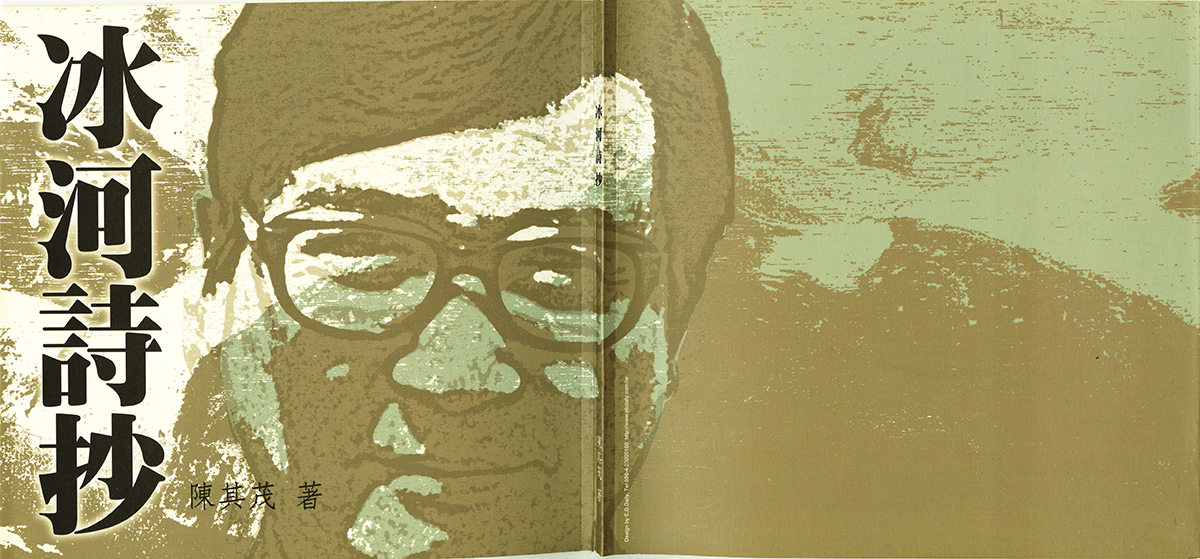
✦ Glacier Poems by Chen Chi-mao, a self-published modern poetry collection (June 2001) with a cover self-portrait.